

You've got acne scars that have been there since your twenties. Indented, textured, visible in every photo where the light catches your face at the wrong angle. You've tried serums that claim to fade scarring. You've tried retinol, vitamin C, niacinamide. Some of them improved the surface slightly. None of them touched the scars themselves. Because the damage isn't on the surface. It's in the dermis, the structural layer of your skin where collagen has been destroyed and never replaced.
Or maybe it's not scarring. Maybe it's the fine lines around your eyes and mouth that weren't there five years ago. The loss of bounce in your cheeks. The dullness that no amount of highlighter fixes, because the skin underneath it has stopped behaving the way it used to. Surface products can't reach the layer where the change is actually happening.
Topical skincare is designed to sit on your skin. Most of the molecules in a serum never get past the barrier. That's not a flaw in the product, that's how your skin works. It's a wall, and it's doing its job. The problem is the things that could genuinely change the structure of your skin can't get through that wall on their own.
Microneedling goes there. It makes tiny channels into the dermis, triggering your own skin to build new collagen, and opening a route for treatment serums to reach the layers where they can actually do something. We've added a Korean skin booster serum called Curenex to every session that multiplies what microneedling can do. It's built around a molecule called PDRN that supports the fibroblasts in your skin, the cells that make collagen.
Aesthete Beauty is one of the few salons in Dundee offering Korean skin booster microneedling with PDRN. Radina is fully trained in the protocol and it's become one of the most requested treatments at the salon. If you've had microneedling before and been underwhelmed, keep reading. This isn't the same treatment.
Korean Skin Booster Microneedling Facial with Curenex starts from £129 for 60 minutes. Book online any time or call us on 01382 217888.
Two things are happening in this facial, and it helps to separate them before we talk about why they work so well together.
Microneedling is the mechanical part. A handheld device passes over your skin with a cluster of very fine, very short needles that move up and down at speed, creating hundreds of tiny micro-channels per pass. You can't really feel individual needles. What you feel is more like a slight vibration and warmth. The channels are microscopic, and they do two things. First, your skin reads them as small injuries and responds with its natural renewal process, including new collagen. Second, they open a temporary route into deeper layers of the skin for anything applied during or immediately after the session.
A skin booster is the serum part. Skin boosters are a category of professional treatments designed to be absorbed into the skin rather than sit on the surface. In a clinic, skin boosters are usually injected. What we do is different, the skin booster serum is worked into the skin through the micro-channels the needles create, so it gets below the barrier without an injection.
On their own, each works. Microneedling without a serum triggers your skin's renewal response, which improves texture and firmness over time. A skin booster applied topically to intact skin is limited, because most of the active molecules are too large to pass through the outer layer on their own.
Together is where the interesting thing happens. The needles create the route, the serum provides actives your skin wouldn't otherwise be able to absorb, and your body responds to both inputs at once.
The Korean context matters because South Korea has been at the front of this category for years. K-beauty is famous for surface products, but the professional side of Korean skincare has built a deep clinical body of work around skin boosters. Curenex is a part of that. It's a Korean-developed formula built for this kind of delivery, not adapted from something else.
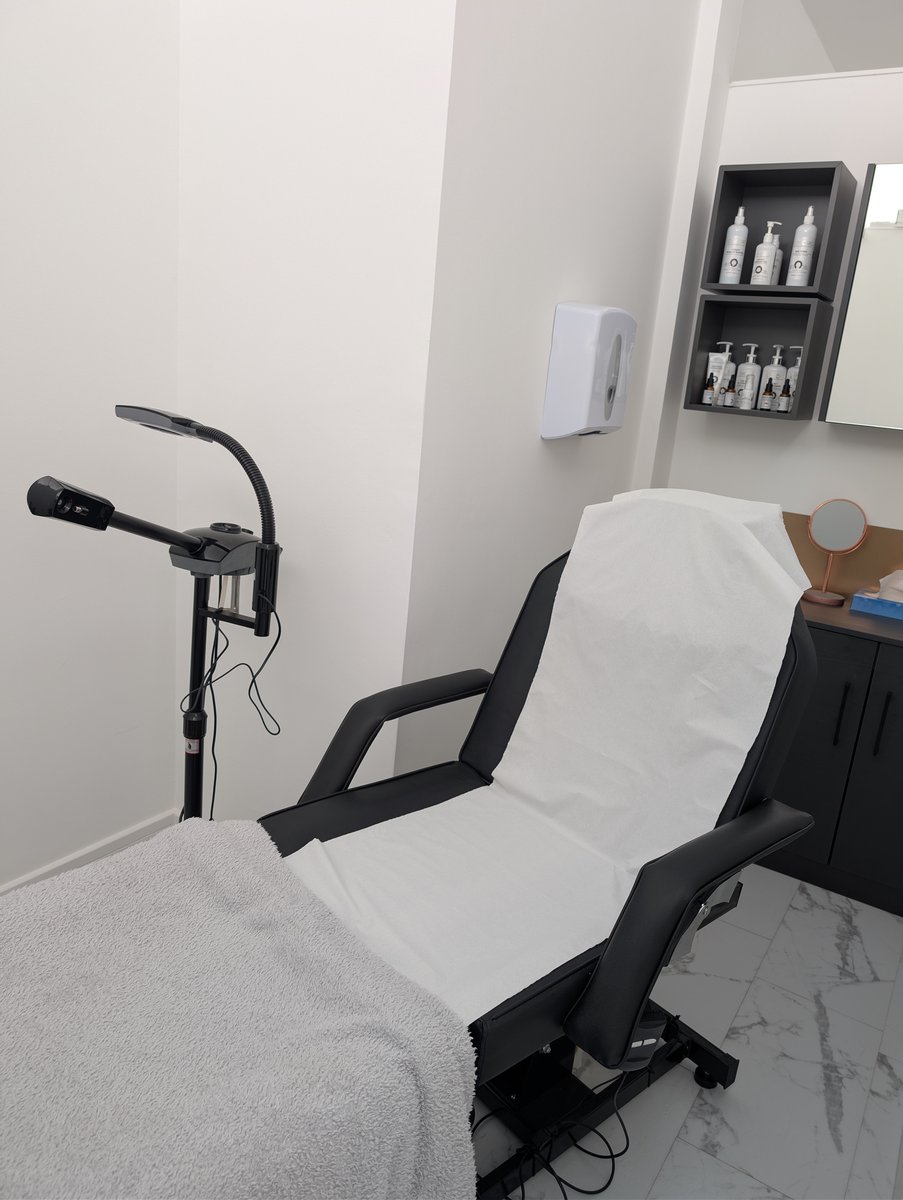
The dedicated treatment room at Aesthete Beauty in Dundee, set up for a Korean skin booster microneedling facial with Curenex.
The active ingredient in Curenex is PDRN, which stands for polydeoxyribonucleotide. That's a mouthful, so we'll explain it in plain terms.
PDRN is a purified fragment of DNA. It's biologically active, which means it doesn't just sit in your skin as a moisturiser. It interacts with your skin cells and influences what they do. Three things are worth understanding.
PDRN molecules fit into a receptor on the surface of your skin cells called the A2A receptor. Think of it as a signalling molecule, it attaches to the cell and tells the cell to behave in a particular way. In the case of PDRN, the signal supports your skin's natural renewal process, encouraging cells to do what they're supposed to do when the skin is healthy. This is why PDRN is described as working at a cellular level. It's not a surface effect.
There's also something called the salvage pathway. Your skin cells need building blocks to make new DNA, and normally they have to build those from scratch, which is slow and uses energy. PDRN provides pre-made fragments the cells can reuse directly. That's more efficient, and it means the cells have the raw materials to keep doing their job when they might otherwise slow down.
Collagen is made by cells called fibroblasts. They're in the dermis, the layer of skin most surface products never reach. Fibroblasts slow down as skin ages, after damage like acne scarring, and under stress. PDRN supports the fibroblasts that build healthy skin, giving them a nudge towards producing collagen again. Combined with the mechanical stimulation of microneedling, which also triggers fibroblasts via the natural renewal response, the effect compounds. You're giving the cells both a reason to work and the materials to work with.
The visible outcome, over a course of sessions, is a change in how your skin looks and feels rather than a single dramatic shift. Published research, including a 2025 systematic review in the Journal of Cosmetic Dermatology, reports improvements in skin elasticity, hydration and texture with a favourable safety profile. In practice, clients describe skin that bounces back when pressed, a more even tone, softer texture, and a general glow that's hard to pin a finger on but obvious in photos. Because the effect is cumulative, the skin keeps improving for weeks after a session as the new collagen matures.
This is why PDRN has taken off in Korean and European skincare over the last few years. It's a category of ingredient that actually does something measurable, not a buzzword.
Curenex is the specific PDRN skin booster we use at Aesthete Beauty. It's a professional-grade product, not a retail skincare item, and it's formulated for exactly the kind of delivery this facial uses. That distinction matters more than it sounds.
Retail serums are built for one constraint, they sit on the surface of skin and hope a small percentage of the active ingredient finds its way in. They're formulated for shelf stability, for a pleasant feel, for a smell that matches a brand. A professional skin booster has a different brief. It's designed to reach deeper layers of the skin, so the formulation prioritises the active ingredient, the concentration, and the delivery profile. It's not meant to be used at home, and it's not sold as a standalone product for good reason.
The Korean context is worth being precise about. PDRN as a molecule was originally developed in Italy in the 1890s for wound healing and regenerative medicine. The clinical body of work around PDRN then has matured most visibly in South Korea, where it's become a mainstream aesthetic treatment over the past decade. Curenex is a Korean-developed formulation that sits in that lineage. When we say Korean skin booster, we mean a product built in a country that's spent years refining this category clinically, not a marketing badge.
In a Curenex session, the serum is worked into the skin throughout the microneedling pass and applied again at the end. It's the central element of the facial, not an upgrade or a finishing touch. The needles create the route. The Curenex is the point.
The texture is light, the skin absorbs it faster than a standard serum because the micro-channels are open, and there's no residue. Most clients describe the in-session feeling as cooling and calming, which is partly the serum and partly the mechanical effect of the device.
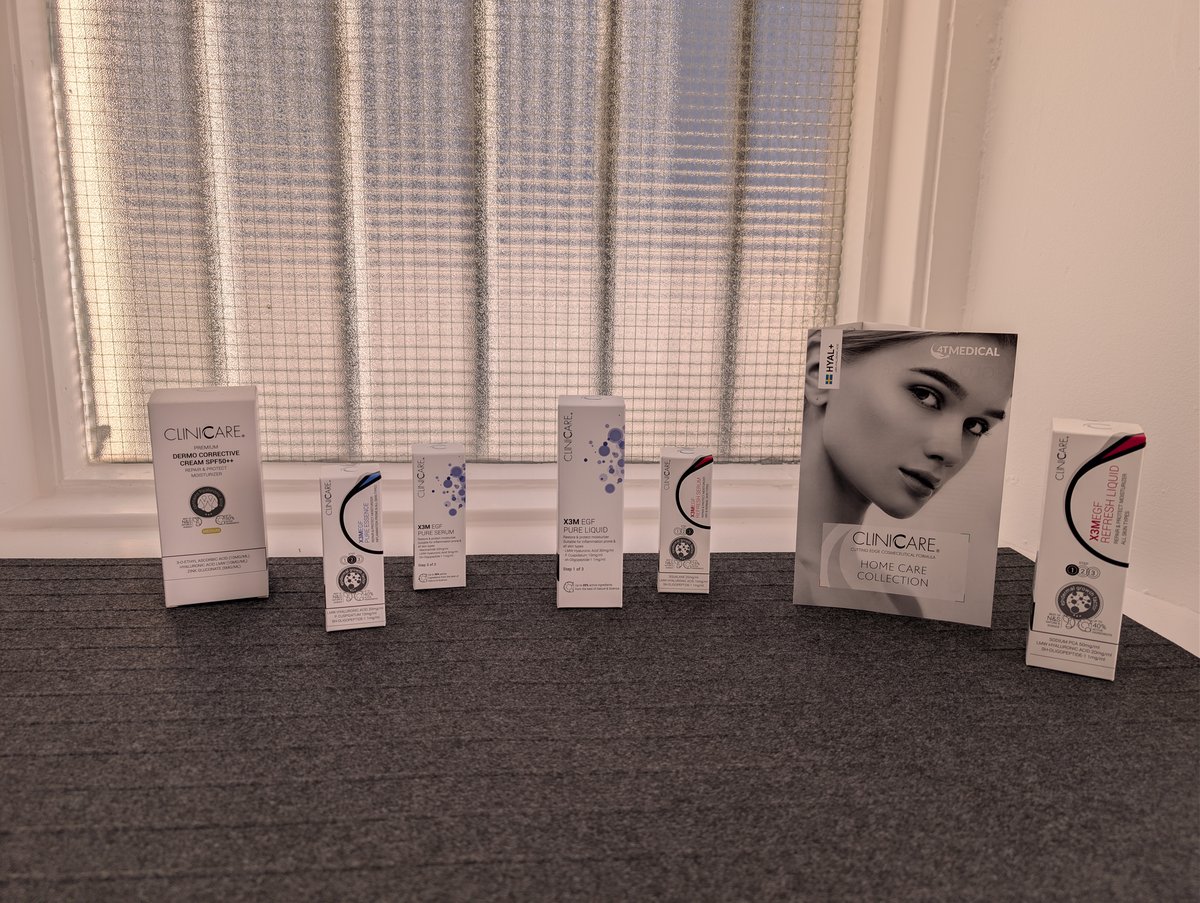
The professional skincare line-up at Aesthete Beauty. Curenex joins a curated selection of clinical-grade products used in the skin-treatment menu at the Dundee salon.
I recently had the pleasure of experiencing a facial treatment at Aesthete, and I must say, it exceeded all my expectations. From the moment I walked in, I was greeted with warmth and professionalism, setting the tone for a truly indulgent experience. Radina was not only highly skilled but also incredibly knowledgeable about skincare. She took the time to assess my skin's needs and tailor the treatment accordingly. The facial itself was nothing short of transformative. If you're looking for a facial treatment that delivers real results in a luxurious setting, look no further. I highly recommend Aesthete to anyone seeking a pampering escape and radiant, healthy skin.
Here's the bit that makes this facial different from anything else on our menu, and from most microneedling in Dundee.
PDRN skin boosters are usually delivered by injection in a clinic. A practitioner injects small amounts across the face at various depths. It works, it's a well established clinical route, and it's what most people mean when they say PDRN treatment. The downside is it's an injection, which means it's a medical treatment, it needs a clinical setting, there's downtime, there are needle marks, there's a higher price point, and there are people who simply don't want a needle in their face.
What we offer is different. It's a topical application of the same category of active ingredient, delivered through the micro-channels microneedling creates. Not an injection, but not a surface serum either.
The rationale is straightforward. PDRN molecules are large, between 50 and 1,500 kDa, which is several orders of magnitude larger than the molecules that can passively pass through the skin barrier on their own. If you rubbed PDRN serum onto intact skin, very little of it would make it to the dermis. That's a fact of skin biology, not a flaw in the product. Microneedling changes the equation. The channels open a temporary route. The PDRN, applied during and immediately after the pass, has a way in that it wouldn't otherwise have.
Is this identical to an injection? No, and we're not going to claim it is. An injection places a measured amount at a specific depth. Microneedling delivery is distributed across the treated area through hundreds of micro-channels. It's a different delivery profile, and the clinical research on topical-with-microneedling PDRN is a separate body of work from the injection research.
What we can say honestly is this. You get a PDRN skin booster delivered below the skin barrier, in a salon setting, without an injection. You get the mechanical benefits of microneedling on top. The serum is worked into the skin throughout the session, it's not an afterthought, and the protocol is built around making that delivery as effective as it can be without a needle.
For the majority of clients who want the benefits of a PDRN facial without going to a clinic and being injected, this is the route. For clients who want a clinical injection protocol, that's not us, and we'll tell you so at consultation.
If you've been researching facials, you've probably seen hyaluronic acid mentioned more than anything else. It's the most common serum ingredient in the world of skincare and treatments. PDRN is a different category, and it's worth understanding how.
Hyaluronic acid (HA) is a hydrator. It pulls water into the skin, plumps the surface, and makes skin look fresher immediately. The effect is visible the day of the facial. It's also short lived, HA gets metabolised by the body over days, and the plumping softens as it does. HA doesn't change the structure of your skin. It hydrates it. That's useful, but it's a different job.
PDRN is a biological active. It doesn't hydrate in the same immediate way. Instead, it interacts with the cells in your skin over time, supporting fibroblasts, encouraging the natural renewal process, providing building blocks for cellular activity. The results are progressive, they build over weeks, and they continue to build after the session as the skin's own processes play out. PDRN supports skin quality at a structural level, not just surface hydration.
Here's a side-by-side.
Hyaluronic acid hydrates and plumps the outer layers of the skin. It works on the surface, the effect is immediate, and it lasts for days. It is what you reach for when the skin looks dehydrated and you want it to drink and bounce back quickly. A well-placed HA product can take a flat, tired face and put the softness back into it within an hour. But it is a surface moisturiser. It does not reach the deeper layers where the real structure of the skin lives.
PDRN works deeper and over a longer timeline. It is absorbed into the dermis through the micro-channels created by the needles, where it supports cellular renewal and signals the skin to build fresh collagen. The onset is progressive, you see changes over weeks, not hours, and the effect is cumulative across a course. The benefit is not a quick plump, it is a visible change in texture, fine lines, and overall skin health that continues to build between sessions.
The two are not really in competition. HA is a hydrator for the moment. PDRN is a treatment for the months ahead. Most of our clients end up using both, HA at home in their daily routine, PDRN delivered through microneedling every three to four weeks during a course.
This isn't a competition. Plenty of people benefit from HA facials, and our CLINICCARE facial includes hyaluronic products for good reason. They do something useful. But if you're looking for a treatment that works on the structure and quality of your skin over time, not just a same-day glow, PDRN is the different league.
The short version. HA is a good facial. PDRN is an investment in how your skin behaves over the next year.
Most people are a little nervous before their first microneedling session, especially if they haven't had one before. Here's exactly what happens from the moment you walk in, so there are no surprises.
Total time, 60 minutes on the books. You'll leave with a slight flush that looks like mild sunburn, usually gone by morning.
Before anything else, your therapist will sit with you to go through your skin history, concerns, current skincare, medications, and any allergies. This is a conversation, not a form. If it's your first visit, you'll probably have booked a consultation separately, and if not, we'll do the relevant checks at the start of the session. You'll be asked about fish allergy in particular, because PDRN is derived from salmonid DNA.
Makeup and surface oils are removed so the skin is clean going in. This is a double cleanse, sometimes three passes, because anything left on the surface gets in the way of the serum later.
For most clients, we apply a numbing cream before the microneedling pass. It sits on the skin for around 15 to 20 minutes. Some clients with less sensitive skin skip this step, your therapist will judge it based on your face and your tolerance. If you've had microneedling elsewhere and found it uncomfortable, tell us, we'll use a stronger protocol.
This is the main part of the session. The numbing cream is removed, Curenex is applied, and the microneedling device passes over your skin in sections. The serum is worked in continuously throughout the pass, so your skin is wet with Curenex the entire time. Depth is calibrated to your skin, thinner areas get a lighter pass, thicker or more scarred areas can take a deeper one.
Once the microneedling pass is done, a final layer of Curenex is applied and allowed to absorb. The channels are still open at this stage, so this last layer gets the deepest delivery of the whole session.
Before you leave, your therapist will walk you through what to do for the next 48 hours. SPF, no retinol, no active acids, no intense heat, gentle cleansers only. It's written down for you and you can message us if you're unsure.
If you've had microneedling before and didn't love it, we hear this a lot. The story is almost always the same. Client tried microneedling somewhere, found it painful, found the skin overreacted afterwards, didn't see much change, wrote the whole category off.
Microneedling done badly is a bad experience. Here's what makes our version different.
Depth calibrated to your skin, not a fixed setting. Microneedling devices have variable depth, and the depth should match the part of the face being treated. Around the eyes and forehead, where skin is thinner, a light pass is appropriate. Around acne scars or on thicker skin, a deeper pass can be used. Running the whole face on one setting is how clients end up with patches that are either over-treated or under-treated. Your therapist adjusts through the session.
Curenex applied throughout, not at the end. Microneedling without a serum is uncomfortable, the skin feels dry and the needles drag. Curenex applied continuously through the pass lubricates the skin, calms it, and makes the mechanical part of the session a lot more tolerable. It also means the serum is being delivered from the first pass, not only at the end.
The serum is the treatment, not the finishing touch. A lot of microneedling offers a serum as an optional upgrade, usually at extra cost. In this facial, Curenex is the point. The mechanical work creates the route, the serum does the work on your skin. You're not paying for needles and getting a spritz of something at the end.
Time taken. A proper session takes an hour. If you're being offered microneedling for £50 in 20 minutes, you're getting 20 minutes of mechanical passes and no meaningful serum delivery. That's not the same service.
The most excellent and luxury service and care. Radina is the consummate professional and beauty therapist. Her attention to detail and comfort is top class. If you are looking for 1:1, luxury pampering experience you've found it.
If a previous microneedling experience put you off, this isn't the same treatment. It's worth a fresh look.
Korean Skin Booster Microneedling Facial, £129, 60 minutes.
One facial, one price, one hour. That's what you book. Curenex is included in every session, it's not an upgrade.
Skin Consultation, £10 (deductible from your first treatment).
If this is your first visit, or you're not sure if this is the right service for you, book a consultation. It's 30 minutes with your therapist to go through your skin, your history, your goals, and we'll recommend the right treatment or course. The £10 comes off the price of your first treatment if you go ahead.
Most clients benefit from a course of 3 to 6 sessions, spaced 2 to 4 weeks apart. The reason for a course is that PDRN works progressively, each session supports your skin's renewal cycle, and the results build. One session gives you a noticeable glow and smoother texture. A full course gives you meaningful change in tone, fine lines, acne scar texture, and overall skin quality.
After the initial course, most clients move to a maintenance schedule of one session every 3 to 6 months, depending on skin type and goals. Your therapist will advise based on what your skin is doing.
We don't pre-sell packages. You book single sessions, see how your skin responds, and decide what to do next. This keeps the choice in your hands.
This facial is well suited to most adult skin concerns, but it isn't for everyone. Here's the honest version.
This treatment tends to benefit clients who:
This treatment isn't right if you:
If you're unsure, book a consultation. £10, 30 minutes, and you'll get a straight answer about whether this is the right service for you. If it isn't, we'll suggest what is, including a different facial or a referral where appropriate.
It's a microneedling facial combined with Curenex, a Korean-developed PDRN skin booster. Microneedling creates tiny channels in the skin, and Curenex is worked in throughout the session so the serum is delivered below the skin's surface barrier. The mechanical side supports collagen production through your skin's natural renewal response, the serum side supports fibroblast activity and skin quality at a cellular level. The result is progressive improvement in texture, tone, fine lines and skin health. Sixty minutes, £129.
PDRN is short for polydeoxyribonucleotide, a purified DNA fragment used in skin boosters. It's derived from salmonid fish, either rainbow trout or chum salmon sperm cells, which are processed and purified into a sterile active ingredient. The molecule itself was originally developed in Italy in the 1990s, with a mature clinical body of work in South Korea. Yes, the fish origin sometimes sounds odd the first time people hear it. In practice, the final ingredient is a purified DNA fragment used in clinical settings across Europe and Asia for years.
A polynucleotide injection is a clinical treatment where a practitioner injects a polynucleotide-based skin booster at various depths in the skin. Our facial uses the same category of active ingredient (PDRN) delivered through microneedling, not a needle injection. The active molecule is similar, the delivery route is different. An injection places a measured amount at depth, microneedling delivery spreads the serum across the treated area through hundreds of micro-channels. We don't claim they're identical, they're different services. What we offer is a PDRN-based skin booster in a salon setting, without an injection.
Hyaluronic acid hydrates and plumps the surface layer. It works fast and fades within days. Profhilo is a clinical injectable based on high-concentration stabilised hyaluronic acid, it's a different product delivered by a different practitioner in a clinical setting. PDRN is a biological active that supports skin cell behaviour over time, building results across weeks. HA hydrates. Profhilo hydrates and spreads under the skin. PDRN supports renewal and collagen at a cellular level. They solve different problems.
The Korean Skin Booster Microneedling Facial is £129 for a 60-minute session. A consultation, if you need one, is £10 and is deducted from the cost of your first treatment. We don't pre-sell packages, you book single sessions.
Most clients describe it as a warm, tingly vibration rather than pain. We apply a topical numbing cream before the microneedling pass for around 15 to 20 minutes, which takes the edge off completely. The Curenex serum worked into the skin throughout the pass also calms the feeling a lot. Some clients don't need numbing at all, others prefer it. Your therapist will calibrate the depth to your skin, thinner areas get a lighter touch.
You'll leave with a slight flush that looks like mild sunburn. This is usually gone by the next morning. Some clients have tiny pinpoint redness for a day or two, which fades. You can wear makeup from the next morning, though we'd recommend going without for 24 hours if you can. Avoid retinol, active acids, and strong heat (sauna, hot yoga, sunbeds) for 48 hours. SPF is non-negotiable the day after, and ideally every day anyway.
Most clients benefit from a course of 3 to 6 sessions, spaced 2 to 4 weeks apart. The exact number depends on what you're working with, clients focused on general skin quality often do 3, clients working on acne scar texture or more significant concerns often do 6. After the course, a maintenance session every 3 to 6 months keeps results going.
Most healthy adults are suitable candidates. The main exclusions are fish allergy to salmonid fish, active skin infection in the treatment area, pregnancy, breastfeeding, recent oral isotretinoin, active cystic acne, keloid scarring history, blood thinners, or recent botox or filler in the treatment area. We go through all of this at consultation, and if you're not a good fit we'll say so and suggest something else.
Yes to all three, with the caveat that results are progressive and a course is needed. Post-acne texture tends to respond well because microneedling is well suited to remodelling old scar tissue and PDRN supports collagen in the dermis where scars sit. Fine lines soften as the skin's structural support improves. Pigmentation often improves as skin renewal picks up, though deeper pigmentation may benefit from a combined approach with a chemical peel.
Yes. Roughly a third of our skin treatment clients are men. Male skin is generally thicker, which can mean the microneedling pass goes a touch deeper, and the results are the same category of improvements in texture, tone, and fine lines. Post-shave irritation often improves too.
You'll see something after the first session, usually a glow and softer skin within 3 to 5 days as the initial inflammation calms. The more meaningful changes in texture, tone and fine lines build over 4 to 6 weeks as new collagen matures. By the end of a full course, the change is visible to other people, not just you. The effect keeps building for weeks after the last session.
I had a facial by Radina and it was fabulous. My skin feel amazing fresh and glowing after my treatment. Very friendly, professional and very knowledgeable approach. I really enjoyed my treatment and will be back for more. If you struggle with skin problems please try skin peel by Radina it's worked wonders for me and I'm sure it will do the same for you. Thank you for your service
A different category of facial, using AHA and BHA acids to resurface the top layers of skin. Good for pigmentation, congestion and dullness.
Read more →Our signature maintenance facial, good between microneedling sessions or on its own for clients who want consistent skin health without a needle-based treatment.
Read more →£10, 30 minutes, deducted from your first treatment. If you're new and not sure which service fits your skin, start here.
Read more →Ready to book? Pick the option that works best for you. If you've got questions before booking, message us on WhatsApp, it's the quickest way to get a proper answer from a human.
We serve clients from across Dundee and the surrounding areas including the West End, Broughty Ferry, Newport-on-Tay, Monifieth, Carnoustie, and further afield.
We use cookies to improve your experience on our website. Essential cookies help the site function properly. Non-essential cookies help us understand how you use the site.
Learn more in our Privacy Policy