

You’ve tried everything. Nail hardeners. Biotin supplements. Cuticle oil. Keeping them short. Growing them long. Filing them round. Filing them square. And they still break at exactly the same point, every single time, like there’s an invisible line your nails refuse to grow past.
The frustrating part isn’t the breaking itself. It’s the not knowing why. Because if you knew why, you could fix it. Instead you’re stuck in a loop of growing, breaking, cutting, growing, breaking, cutting, and wondering whether your nails are just permanently weak.
They’re probably not. Weak nails are rarely permanent. The cause is almost always something specific and fixable. Here’s what actually makes nails break and what you can do about each one.
Before you scroll past this thinking it’s obvious, hear this out. Nail dehydration doesn’t mean your hands feel dry. Your skin can be perfectly moisturised while your nail plates are parched underneath.
Nails are made of keratin, and keratin needs moisture to stay flexible. A hydrated nail bends slightly under pressure and springs back. Flexible. Resilient. A dehydrated nail is rigid and brittle, so instead of flexing when it catches on something, it snaps. Clean break. Same spot. Every time.
The biggest dehydrator most people don’t think about is hand sanitiser. Alcohol-based sanitiser strips moisture from the nail plate every time you use it, and if you’re using it ten or twenty times a day, your nails are fighting a losing battle against constant dehydration.
Washing up liquid is another one. Hot water and detergent pull oils from both the skin and the nail plate. Without gloves, every time you wash dishes you’re actively weakening your nails.
The fix is straightforward but it has to be consistent. Cuticle oil, daily, applied directly to the nail plate and the skin around it. Not hand cream. Hand cream moisturises skin. Cuticle oil penetrates the nail itself. Ten seconds a day makes a measurable difference within two to three weeks.
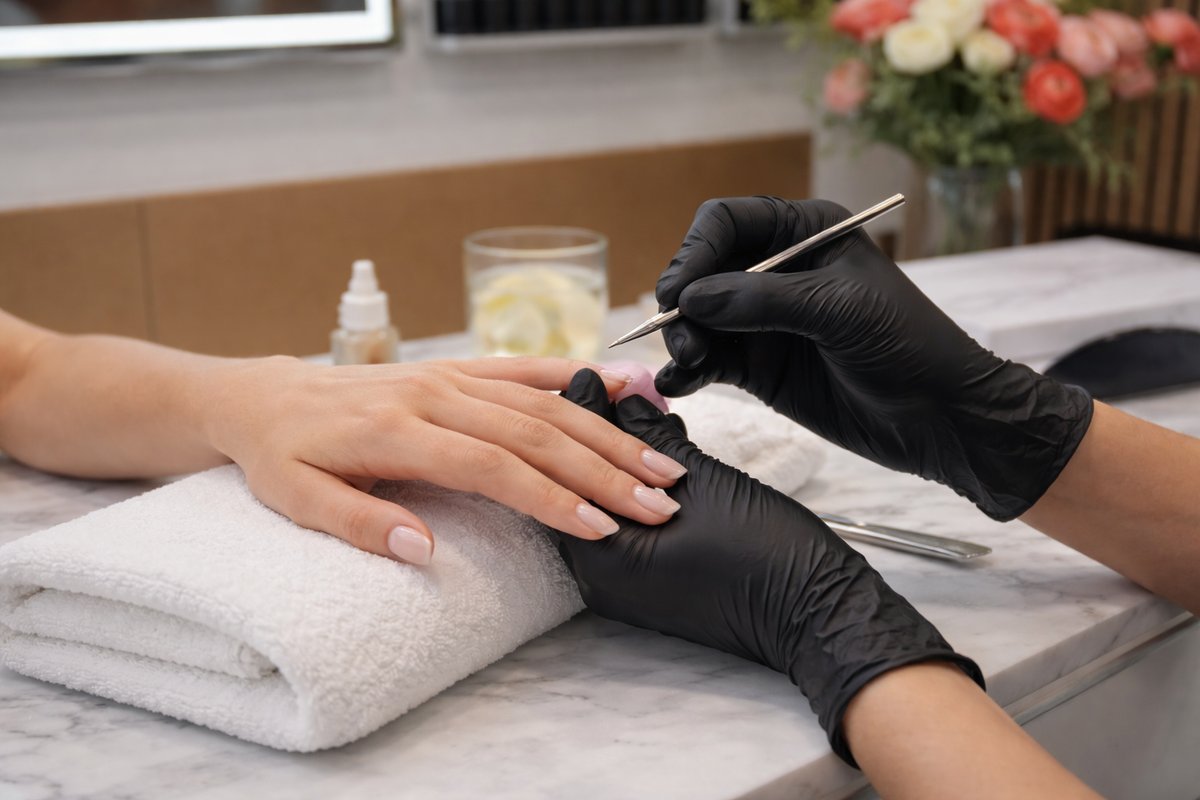
If you’ve worn acrylics, gel, or any overlay system and it was removed badly, your nail plate might be genuinely thinner than it should be. Every time someone files through product into the natural nail, or you peel off gel polish instead of having it soaked properly, layers of nail plate go with it.
Thin nails break more easily because there’s less structural material to absorb daily impact. The nail grows from the matrix at the base and it takes about six months for a fingernail to grow from root to tip. That means if your nails were damaged six months ago, the damaged section might only now be reaching the free edge where it’s most vulnerable to snapping.
The solution depends on how severe the damage is. For mild thinning, daily cuticle oil plus patience while the damaged nail grows out is often enough. For moderate damage where the nails are paper-thin and splitting, IBX nail repair is a treatment worth knowing about. IBX is a penetrative system that works inside the nail plate to strengthen it from within, filling in the gaps left by damage. At Aesthete Beauty, IBX manicure starts from £35.
For severe damage where the nails can’t grow past a few millimetres without breaking, a BIAB overlay provides an external protective shell while the natural nail recovers underneath. The overlay absorbs the daily impacts that would otherwise snap the weakened nail, giving it three to six months of protected growth. By the time the BIAB eventually comes off, most clients have natural nails that are noticeably stronger than when they started.
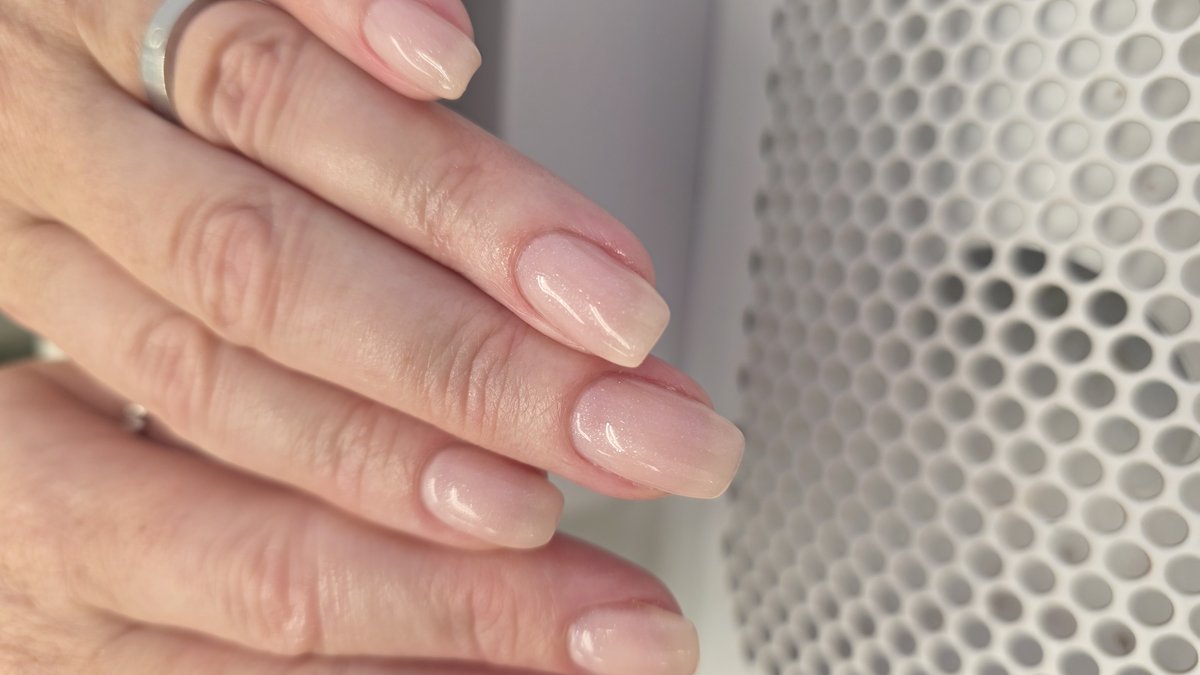
Some nails grow with a natural downward curve, a hook at the free edge, or an uneven thickness across the nail plate. These structural features aren’t damage. They’re just how your nails grow. But they create weak points where stress concentrates, and that concentrated stress is what causes the nail to snap at the same spot every single time you get it to a certain length.
Hooked nails are the most common structural cause of repeated breaking at the same length. The downward curve creates a lever effect where the tip of the nail catches on everything and the force transfers to one concentrated point instead of distributing across the full nail width.
Correcting this requires a tech who understands nail structure and can build a compensating shape using BIAB or hard gel to redistribute stress across the nail. At Aesthete Beauty, hooked nail correction starts from £89 and it’s a specialist service that progressively reshapes the nail over multiple appointments.
This one’s simple. Surprisingly common though. Filing your nails back and forth like a saw weakens the free edge by creating microscopic tears in the keratin layers. Each tear is a potential split point, and once a split starts, it travels.
File in one direction only. Pick a direction, stick with it, and use gentle strokes. A glass file is gentler than a metal file or an emery board because it seals the edge as it shapes rather than tearing it.
Shape matters too. Square nails with sharp corners catch on things more often than round or almond shapes, and every catch is a stress event. If your nails break at the corners consistently, switching to a rounder shape might solve the problem entirely without any product or treatment.
Your nails grow from the matrix, and the matrix needs raw materials to build healthy keratin. If your diet is low in protein, the nails it produces are thinner and weaker. This isn’t a dramatic deficiency situation. It’s subtle. Slightly thinner nails, slightly less resilience, slightly more likely to break under the same daily stresses.
Iron deficiency does something similar. Nails that are spoon-shaped, ridged, or unusually brittle can signal low iron levels. If your nails changed noticeably and there’s no obvious external cause, it’s worth mentioning to your GP because nail changes sometimes flag nutritional gaps that blood work can identify.
On the water side, nails that spend too much time wet become soft and lose their structural integrity temporarily. Prolonged water exposure, swimming, long baths, washing up without gloves, causes the nail plate to absorb water, expand, then contract as it dries. That expansion and contraction cycle weakens the bonds between keratin layers over time.
If you’ve addressed the obvious causes, you’re using cuticle oil daily, you’re filing properly, your diet’s reasonable, and your nails still break at the same frustrating length, it’s time to get a professional assessment.
A nail technician who understands nail health can look at your nails and identify whether the issue is structural, damage-related, product-related, or something that needs medical attention. Ten minutes of in-person assessment from someone who sees hundreds of nails a week is worth more than months of guessing and hoping.
At Aesthete Beauty, Radina has over 11 years of experience in the industry and specialises in nail health alongside appearance. Services that address breaking nails include IBX nail repair from £35, BIAB overlay from £49, and hooked nail correction from £89.
All products are HEMA-free and TPO-free. Book online any time or call 01382 217888. Aesthete Beauty, 76 Bell St, Dundee DD1 1HF.
Why do my nails keep breaking at the same length?
Usually because of a structural weak point, dehydration, or previous damage that’s grown to the most vulnerable part of the nail. The free edge is where stress concentrates, and if the nail is weakened at that point by any of these factors, it breaks there consistently.
What is the healthiest nail option at a salon?
BIAB with HEMA-free products is one of the gentlest professional options. It strengthens without damaging, can be infilled without full removal, and protects weak nails while they grow. Combined with Russian manicure preparation, it gives the longest wear with the least nail plate impact.
Does biotin actually help nails?
Research is mixed. Some studies show improvement in brittle nails with biotin supplementation, others show no significant effect. If you’re already eating a balanced diet, biotin supplements are unlikely to make a dramatic difference. Cuticle oil applied directly to the nail plate is more reliably effective.
Can BIAB fix broken nails?
BIAB doesn’t repair damage that’s already happened, but it protects the nail from further breakage while the damaged section grows out. Over three to six months, the nail plate underneath recovers while the BIAB overlay absorbs the daily stresses that would normally cause more breaks.
What is IBX nail repair?
IBX is a professional treatment that penetrates the nail plate and strengthens it from inside. It fills microscopic gaps in damaged keratin, making the nail more resilient. At Aesthete Beauty, IBX manicure starts from £35.
Should I keep my nails short if they keep breaking?
Short nails break less because there’s less length for stress to act on, but keeping them permanently short doesn’t fix the underlying cause. If you want longer nails, addressing the root issue, whether it’s dehydration, damage, or structure, gives better long-term results than just keeping them trimmed.
How long does it take for damaged nails to grow out?
A fingernail takes about six months to grow from the matrix to the free edge. If the damage happened recently, you’ll see improvement at the base of the nail within a few weeks, but the damaged section won’t fully grow out for several months.
Whether you're looking to book a treatment or just have a question, we'd love to hear from you. Book online any time or get in touch using any of the options below.
We serve clients from across Dundee and the surrounding areas including the West End, Broughty Ferry, Newport-on-Tay, Monifieth, Carnoustie, and further afield.