You shouldn’t have to gamble on hygiene when you’re getting your nails done. But most people do. Not deliberately. They just don’t know what to look for, and salons that cut corners on sterilisation rarely advertise the fact because a pretty Instagram grid and a hundred five-star reviews can paper over a lot of things that would concern you if you saw them up close.
The good news is that it takes about thirty seconds of paying attention to tell whether a salon takes hygiene seriously or not. Here are nine things to check, starting from the moment you walk in.
This is the fastest tell. Look at the station before your appointment starts. Are the tools already laid out, or does your tech prepare them fresh while you watch?
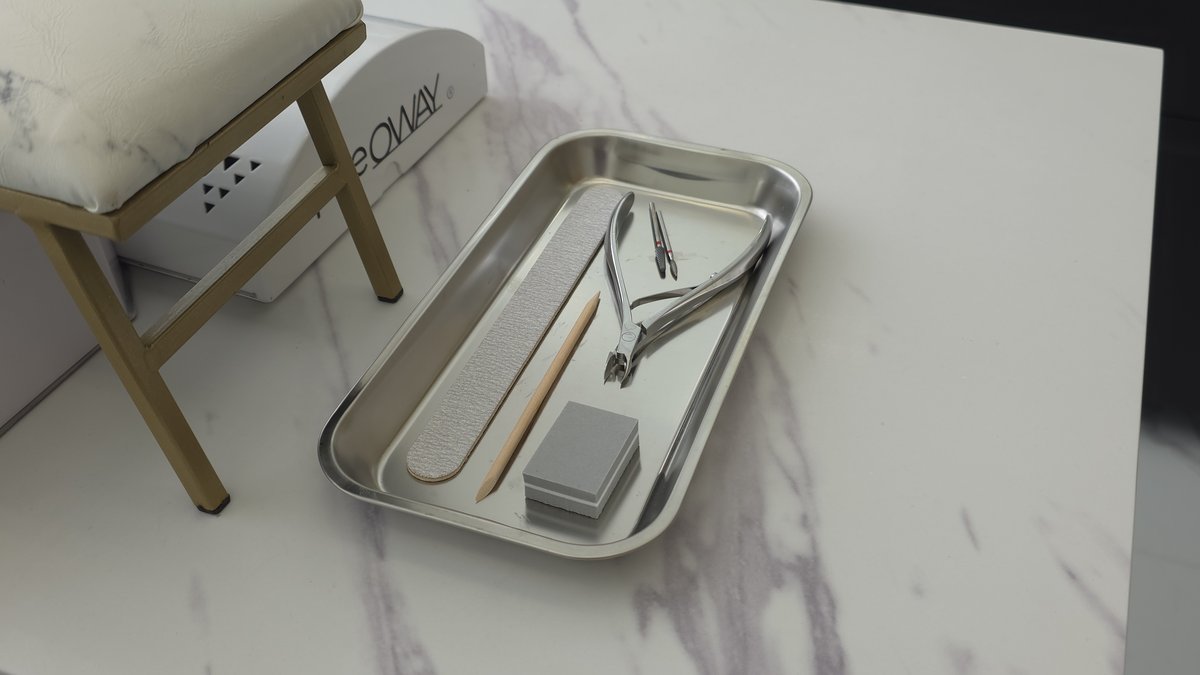
In a clean salon, every client gets an individually prepared tool set. Files and buffers should be brand new and unused. Metal tools should come from a sealed pouch or a clean container, not from a drawer that’s been sitting open all day with three other clients’ residue on everything inside it. If you sit down and the tools look like they’ve already been used, that’s not a salon cutting costs on aesthetics. That’s a salon cutting costs on your safety.
At some salons, the same nail file gets used on multiple clients. That’s not a grey area. Nail files can’t be sterilised. Porous material. Once they’ve touched one person’s nails, they carry dead skin, product residue, and potentially bacteria. They should be single-use and disposed of after every client.
Gloves aren’t just for protection during medical procedures. During a manicure, your tech is working extremely close to your cuticles, which are a direct entry point for bacteria. Gloves protect you from anything on the tech’s hands, and they protect the tech from anything on yours.
Not every salon insists on gloves. Some argue they reduce sensitivity and make it harder to feel what they’re doing. That may have been a reasonable position years ago, but modern nitrile gloves are thin enough that there’s no meaningful loss of precision. Any tech who’s practised in gloves doesn’t notice the difference.
Nail filing, especially e-file work, generates fine dust particles. That dust contains nail fragments, product residue, and whatever else was on the nail surface. Breathing it in repeatedly is a health risk for both you and the technician.
A proper dust extraction unit sits on or near the desk and actively pulls airborne particles away from the work area. You’ll hear a low hum when it’s running. Some salons use Vodex units, which are the professional standard, but any functioning extraction is better than none.
If there’s visible dust settling on the desk surface during your appointment and no extraction running, the salon is prioritising cost savings over your respiratory health. Dust extraction units aren’t expensive. Choosing not to use one is a deliberate decision.
Watch what happens when the client before you leaves. Does the tech wipe down the desk, the lamp, the arm rest? Or do they just call you over and start?
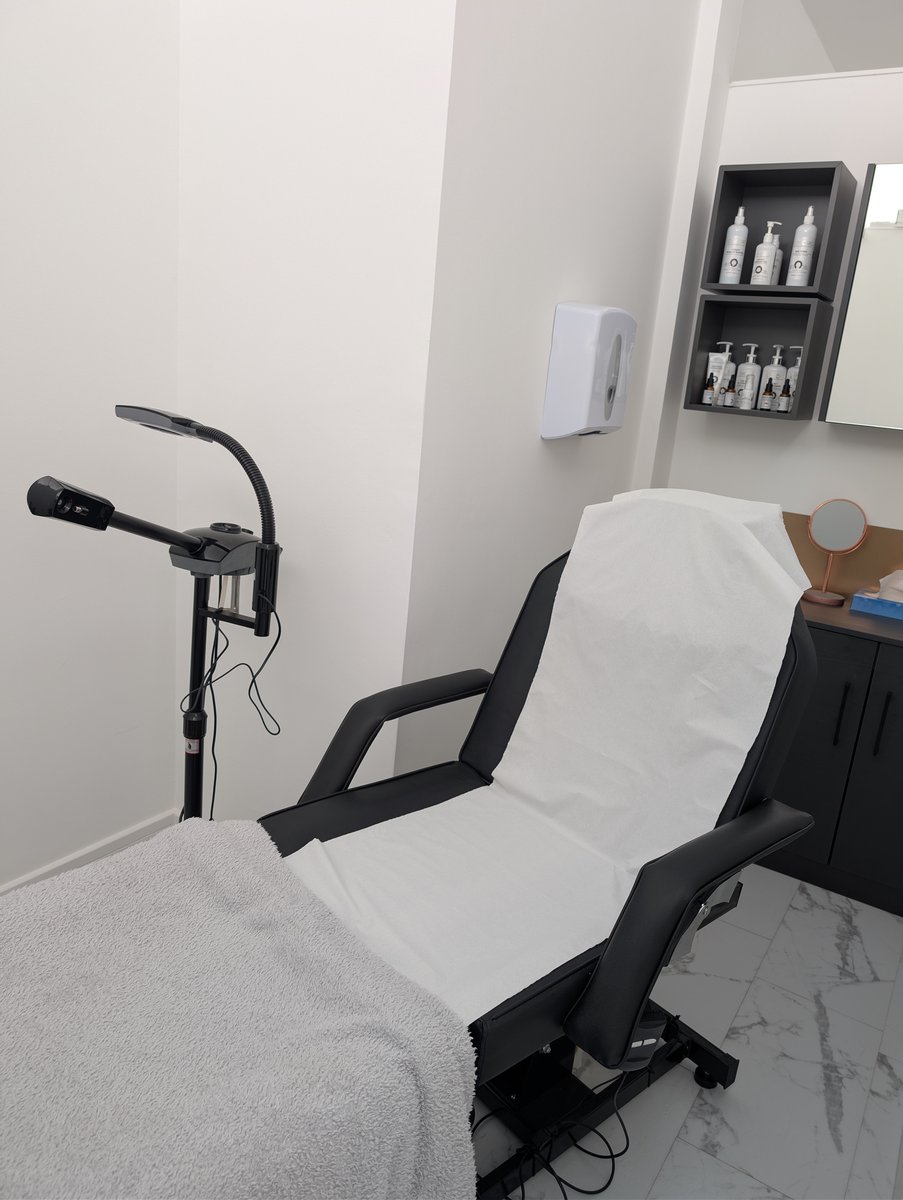
A proper changeover includes wiping all surfaces with disinfectant, disposing of used files and buffers, changing the towel or disposable cover, and setting up fresh tools. It should take a couple of minutes. If you’re called over immediately after the previous client stands up, the changeover didn’t happen.
This matters because surfaces hold bacteria. The UV lamp that cures your gel? The previous client’s fingers were inside it minutes ago. The arm rest your hand sits on? Same. These are contact surfaces that need cleaning between every single use.
Ask. It’s not a rude question and any salon that takes hygiene seriously will answer without hesitation. What you’re listening for is a specific process, not vague reassurance.
Metal tools should be cleaned in an ultrasonic bath or manual scrub, then sterilised using heat, UV, or chemical sterilisation depending on the tool type. The salon should be able to name their process. If the answer is “we clean everything” with no specifics, that’s not an answer.
Some higher-end salons use autoclaves, which are the same pressurised steam sterilisers used in medical settings. That’s the gold standard. But not every tool needs autoclaving. What matters is that there’s a clear, consistent process that happens after every client, and that the salon can describe it.
Look at the bottles on the desk. Are they professional products with proper labels, or are they decanted into unmarked containers? Professional products come with ingredient lists, batch numbers, and safety data. Unmarked bottles could contain anything, and there’s no way to verify what’s being put on your nails.
This also applies to gel polish. Check whether the bottles have brand names you can look up. If you’re concerned about ingredients like HEMA, knowing the brand means you can verify whether the products are HEMA-free before your appointment starts.
There’s a difference between clean and chemical. A well-ventilated salon with proper products shouldn’t hit you with overwhelming fumes when you walk through the door. Strong chemical smells usually mean poor ventilation, aggressive products, or both.
Acrylic application does produce a noticeable odour that’s hard to eliminate completely, but gel and BIAB products are virtually odourless when applied correctly. If a gel-only salon has strong chemical fumes, something is off.
Ventilation matters more than most clients realise. Look for open windows, air purifiers, or extraction systems. A basement salon with no windows and no ventilation is a completely different environment from a street-level space with natural airflow, and your lungs will know the difference even if the Instagram photos look the same. Headaches after a nail appointment are a classic sign of poor ventilation, not a normal part of having your nails done.
Google reviews that only talk about how pretty the nails look tell you half the story. Look for reviews that mention the experience: was the salon clean, did the tech wear gloves, were the tools prepared fresh, was the appointment rushed?
Clients who pay attention to hygiene tend to mention it when it’s done well. Comments like “tools were individually prepared” or “the whole station was cleaned before my appointment” are green flags worth looking for. A salon with hundreds of five-star reviews and not a single mention of cleanliness, sterilisation, or hygiene tells you something. Either nobody thought to mention it, or there was nothing worth mentioning. Both possibilities should make you pause before booking.
Time pressure is where hygiene corners get cut first. A salon running 15-minute gel manicure appointments is not leaving time for proper changeover, thorough cuticle preparation, or careful product application. Something is being skipped to hit that schedule.
A gel manicure takes 45 minutes when done properly. Russian manicure preparation alone takes 30 minutes. If appointments are significantly shorter than these benchmarks, ask yourself what’s being left out, because the laws of physics haven’t changed and the work still takes the same amount of time regardless of how many clients the salon is trying to squeeze through.
Rushing also affects the quality of e-file work, which is directly relevant to safety. Working near living cuticle tissue with a powered tool requires patience and precision. Speed and precision don’t coexist in nail work. One always comes at the cost of the other, and when the stakes involve your skin and your nails, you want the person holding the e-file to be taking their time.
You walk in. The station is clean. The tech sets out fresh tools while you watch. Gloves go on. Dust extraction hums in the background. The products on the desk have labels you can read. Nobody’s rushing. And if you ask a question about any of it, you get a straight answer.
That’s the baseline. Not the luxury option. Not the premium tier. The bare minimum you should expect from any salon you’re handing your money and your nails to.
At Aesthete Beauty on Bell Street in Dundee, every one of these nine points is standard practice. Vodex dust extraction runs throughout every appointment. Radina has over 11 years in the industry and takes hygiene as seriously as she takes the nails themselves. Gel polish starts from £43, BIAB from £49. Disposable files and buffers are used once. Gloves are worn for every service. Tools are cleaned between every client. All gel products are HEMA-free and TPO-free. And appointments are never rushed, because rushing is how mistakes happen and hygiene gets compromised.
If you’ve been looking for a salon in Dundee where hygiene isn’t a question mark, where the tools are fresh, the products are HEMA-free, and the person doing your nails has over 11 years of professional experience, Aesthete Beauty is worth a visit.
Book online any time or call 01382 217888. We’re at 76 Bell St, Dundee DD1 1HF, right in the city centre.
How do I know if my nail salon is good?
Look beyond the photos and reviews of finished nails. Check whether tools are individually prepared, whether gloves are worn, whether the station is cleaned between clients, and whether the tech can explain their sterilisation process. A good salon is transparent about hygiene because they have nothing to hide.
What are the signs of a bad nail salon?
Tools sitting out from the previous client. No gloves. No dust extraction. Strong chemical fumes. Appointments that feel rushed. Reused nail files. Evasive answers when you ask about sterilisation. Any one of these on its own is a concern. More than one and you should leave.
Should my nail tech wear gloves?
Yes. Gloves protect both you and the technician from cross-contamination. Modern nitrile gloves are thin enough for full precision work. A tech who refuses to wear gloves is making a choice about convenience over safety.
Can I catch an infection from a nail salon?
It’s possible if tools aren’t properly sterilised. Bacterial infections, fungal infections, and in rare cases bloodborne pathogens can be transmitted through contaminated nail tools. Proper sterilisation between clients eliminates this risk almost entirely.
What is Vodex dust extraction?
Vodex is a professional nail dust extraction system that sits on the desk during filing and e-file work. It draws airborne nail dust and product particles away from you and the technician, reducing respiratory exposure. It’s the industry standard for salons that take air quality seriously.
Are nail salons in the UK regulated for hygiene?
Local councils can inspect nail salons under health and safety regulations, but there’s no mandatory licensing for nail technicians in the UK. This means standards vary widely between salons. Your own observation is your best protection.
What should I do if I think a salon is unhygienic?
Leave. You’re not obligated to stay for an appointment if you’re uncomfortable with the hygiene standards. You can also report concerns to your local council’s environmental health team.
Whether you're looking to book a treatment or just have a question, we'd love to hear from you. Book online any time or get in touch using any of the options below.
We serve clients from across Dundee and the surrounding areas including the West End, Broughty Ferry, Newport-on-Tay, Monifieth, Carnoustie, and further afield.